
Blog
Gorilla Transformed HETV Workflows with EditShare & Altered Images
Two cities, one finish
At Altered Images, we pride ourselves on delivering technology solutions that support real-world production challenges. Working alongside our partner EditShare, we helped Gorilla implement a high-performance shared storage platform that has transformed finishing workflows across its Cardiff and Bristol facilities.
The following case study explores how EditShare NVMe storage has enabled faster collaboration, streamlined media management and improved flexibility for high-end television and feature film production.
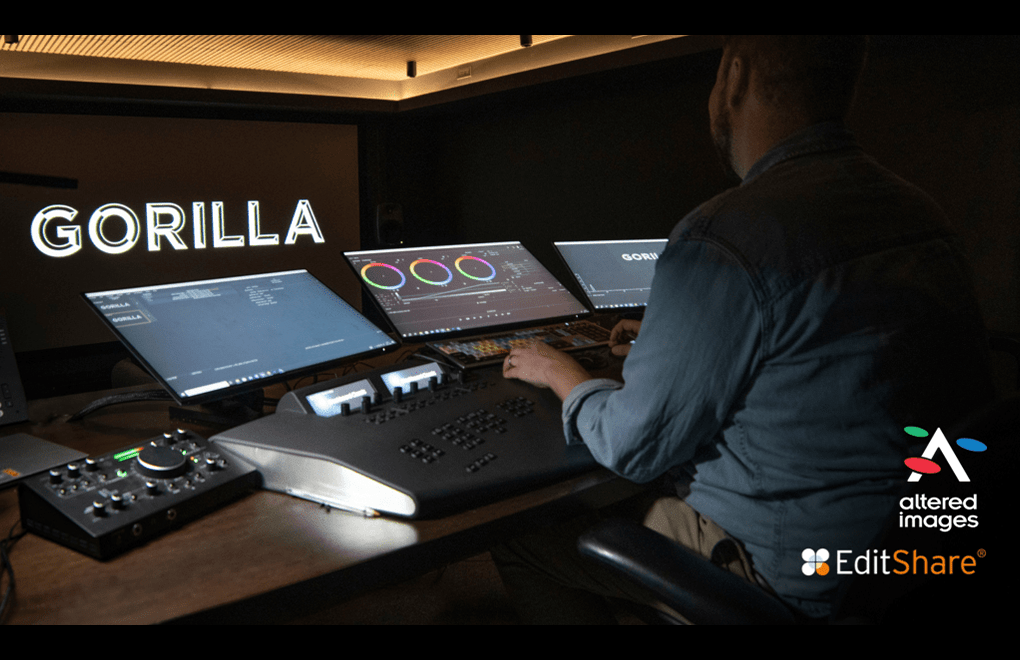
Gorilla has connected its Cardiff and Bristol finishing operations around high-performance EditShare NVMe storage, working with technology solutions partner Altered Images to give its creative teams faster access to native media while removing hours of manual media management for HETV (high-end television) and film workflows.
Gorilla was formed in 1999, centred around a single linear tape edit suite. Nearly 30 years later, the company operates three principal facilities and delivers hundreds of hours of multi-genre programming, from volume daytime television to high-end drama and feature films. Its clients include all UK broadcasters and international distributors and studios, among them HBO, Paramount, Netflix, Amazon and Disney+.
Its five-floor Welsh headquarters operates around the clock, alongside a second Cardiff city-centre facility and an expansive Bristol operation. Across the business, Gorilla has more than 150 Avid edit suites, ten Baselight and DaVinci Resolve grading suites, and ten audio dubbing suites, including Dolby Atmos.
Each facility can operate independently, but the sites are connected so Gorilla can draw on people, rooms and equipment across its wider operation. Beyond creative post-production, Gorilla is also a technical and media workflow specialist, with satellite uplink and downlink facilities, broadcast lines, studios, location editing, kit hire and live TX galleries. Its media experts manage hundreds of terabytes of UHD/HDR media, including VFX pipelines to and from multiple international vendors, within a fully hybrid operation supporting both on-premises and remote working for staff and clients.
This interconnected model has become increasingly important as the company’s high-end television, scripted and feature-film work has grown.
Creating a new tier for finishing
Until recently, Gorilla had never operated a central tier of high-speed shared storage dedicated to its most demanding finishing workflows.
As its scripted and feature work increased, teams were working from local and internal storage, with large volumes of media being moved manually between systems. Conforms had to be copied onto individual Baselight systems and media needed to be kept synchronised as projects progressed.
“We have expanded our films and HETV output and reached the point where it was time to invest in what we call tier-zero storage,” says Gorilla Managing Director Rich Moss. “It was our first shared storage tier designed for the high speeds required by image sequences and the other media we work with in finishing.”
Gorilla initially deployed EditShare NVMe shared storage at its Cardiff facility in 2025. The platform was introduced to support Baselight, DaVinci Resolve, assist, QC (quality control) and delivery systems working with high-resolution native camera media and image sequences.
The EditShare investment also prompted Gorilla to upgrade its core internal infrastructure to 100Gb, allowing high-end systems and supporting workstations to access the storage at significantly higher speeds.
Following the success of the Cardiff deployment, Gorilla worked with technology solutions partner Altered Images to extend the EditShare environment into Bristol. A second EditShare NVMe system was installed in the spring of 2026, giving Gorilla the foundation for a coordinated finishing workflow across both cities. Mike Fitchie, Head of Technical Presales at Altered Images said,“I have had a +20 year relationship working with the team at Gorilla, our technical consultation is always based on long-term value and personal support. Altered Images and EditShare certainly tick both the value and support boxes.”
The facilities are connected by a low-latency 10Gb link. Media can be synchronised between the two EditShare systems, giving teams local access to the same production material while also supporting direct access between sites where required.
“The first EditShare NVMe system had already demonstrated the difference that high-performance shared storage could make to Gorilla’s finishing operation,” says Jason Cowan, Business Development Director at Altered Images. “The Bristol project was about extending that capability into a second location and helping Gorilla build a more connected, shared and efficient workflow experience across the two facilities.”
Conform once, work in either city
For Online Finishing Editor Mark Bankhead, the change has been immediate and significant. “Before EditShare, we were doing a lot of media management, moving conforms between Baselights and different internal storage systems,” he says. “As projects progressed, we had to keep the media synchronised manually. EditShare has completely transformed our conform workflows.”
A production can now be conformed onto the EditShare storage at one facility and synchronised overnight to the system at the other. An editor or colourist working in Cardiff accesses the Cardiff copy, while a user in Bristol works from the Bristol system.
Once the material has been synchronised, the same production media is available at both sites without teams manually copying drives, rebuilding projects or checking whether the latest material has arrived.
“When you access a scene, the media is there and automatically comes online,” says Bankhead. “We no longer have to manually manage it from a facility 50 miles away. We can concentrate on the work we need to do.”
The workflow also supports direct access between locations. Bankhead has worked in Cardiff while accessing media held on the Bristol EditShare, caching locally to the Cardiff system and completing an offline without first transferring the project.
On another production, an online session can take place in Cardiff while the client is based in Bristol. Grade renders and other media remain available across the connected environment, reducing the preparation required before the session begins.
Sharing creative resources across sites
The infrastructure is also changing how Gorilla allocates colourists and grading rooms.
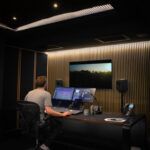
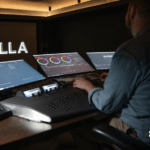
On “The Dream Lands” for Sister Pictures, two colourists working from Bristol have been able to use Baselight systems and media located across both facilities. One colourist works with a Baselight and EditShare system in Bristol. The second sits in another Bristol grading room while remotely controlling a Baselight located in Cardiff, with that system drawing on the Cardiff EditShare storage. Both can work on the same series and pick up each other’s projects, even though the underlying systems are operating from different locations.
“The addition of tier-zero shared storage has given us the flexibility to join the two sites and has changed the way we finish customer productions,” says Moss.
For Gorilla, this extends beyond remote access. The company can allocate work according to the available artist, grading room and production schedule across its facilities, making its wider pool of creative and technical resources available to clients in either city.
Christine Kelly, Colourist at Gorilla adds, “EditShare has made it much easier for colourists to work in parallel across the company. With a simple change of media container within Baselight, we can continue working on projects across different sites as though the media were local. For a company spanning multiple locations, that makes a huge difference.”
Working directly with native media
Performance was central to the investment because Gorilla’s scripted teams generally work with a variety of native camera media throughout finishing.
Baselight systems now access source media directly from the EditShare storage, with local caching used where appropriate. Gorilla has reported strong operational performance with formats including ARRIRAW and footage captured on Sony Venice cameras.
The storage is also supporting several Baselight Assist workstations, DaVinci Resolve, Flame and Avid workstation. Connections can be specified according to the requirements of each workstation, with 10Gb, 25Gb, 50Gb and 100Gb connectivity available within the facilities.
“The storage delivers whatever we throw at it,” says Moss. “The focus is now on making sure everything connected to it can keep pace.”
Removing the wait from QC and delivery
The impact has also extended beyond grading and online finishing into Gorilla’s QC and delivery departments.
Large image-sequence exports previously had to be copied from finishing storage onto local drives before they could be played back and reviewed. A feature-film delivery could involve moving around five terabytes of image sequences, followed by further copying whenever patches, replacement shots or updated sequences were produced.
Those renders can now be reviewed directly from the EditShare storage using Gorilla’s Cortex QC and delivery systems.
“If we exported an image sequence for a feature, QC would previously have needed to copy it to an internal drive before they could play it,” says Bankhead. “Now they can take the render on the EditShare and play it immediately. It has sped up the whole delivery and QC process.”
Removing those copies has also simplified complicated deliveries containing multiple patches and replacement shots.
“That whole media-handling element has gone away,” Bankhead adds. “We can focus on doing the work, because moving the media around was a waste of valuable time we could not charge for.”
Proven on high-end productions
The EditShare systems have already supported a range of drama and feature-film work, including The Rapture (six episodes for Mammoth Screen), Film4 feature H Is for Hawk, and The Dream Lands (six episodes for Sister Pictures).
On H Is for Hawk, grading was completed in Bristol while online finishing took place in Cardiff, showing how different stages of a production can be divided between Gorilla’s facilities without the overhead of manual media management.
Together, these productions underline the broader role the storage now plays. It is supporting grading, online finishing, native-media playback, image-sequence delivery, QC and cross-site collaboration across different types of high-end work.
The next opportunity
Gorilla is now beginning to explore how EditShare FLOW Automation could save further time by using defined triggers to automate routine processes that technical staff currently manage by hand.
Ken Burnett, Technical Operations Manager at Gorilla commented, “I was particularly excited to use EditShare FLOW for a grade project we are currently involved in. We are automatically synchronising media between our Bristol and Cardiff sites via our 10Gb line. Both sites will work from a local EditShare unit, with FLOW keeping each site identical. FLOW has removed the operational complexity allowing our colourists to focus entirely on the creative side of the job.”
For Moss, the value of the investment lies both in the workflows already transformed and in the platform it provides for continued development.
“The storage started as a response to the performance requirements of high-end finishing,” he says. “It has since opened up the flexibility to connect our sites, share our resources and change how we deliver that work as a business. The Altered Images and EditShare teams have been an absolute pleasure to work with.”
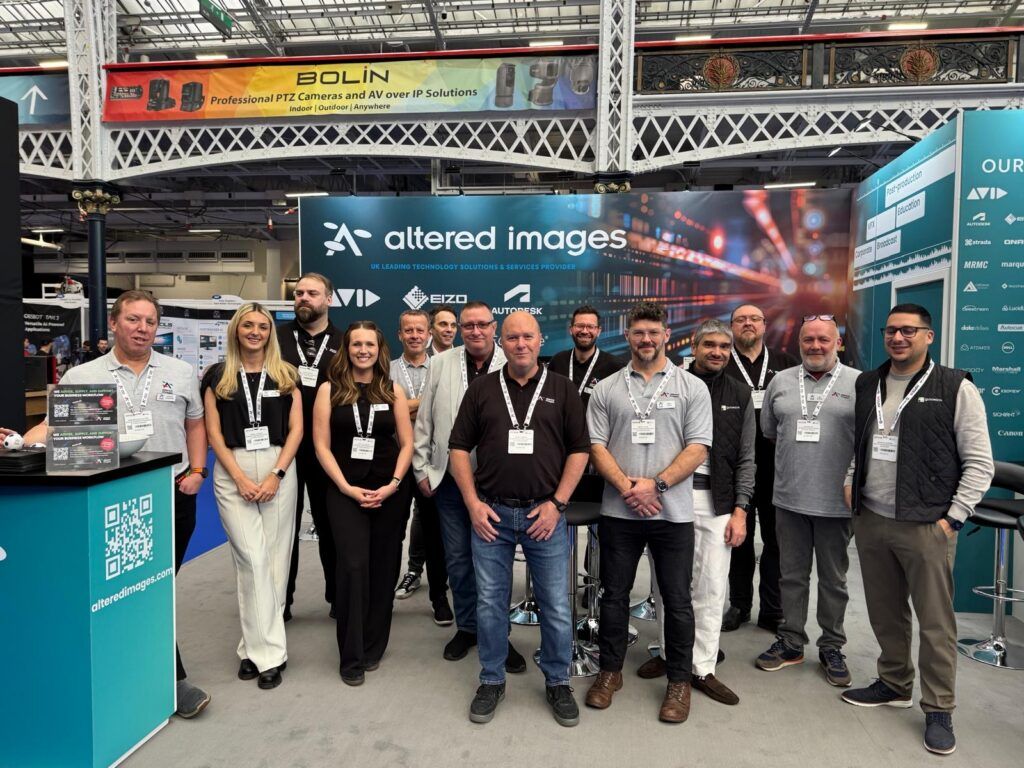
Meet the team HERE
Follow us on LINKEDIN for our latest News
Or SUBSCRIBE to our monthly newsletter
For further information, please contact us by email on sales@alteredimagesltd.com or by phone on 01932255666