IBC 2026 Recap: Mike Fitchie on MCP and the Future of Media Workflows
By Mike Fitchie, Head of Pre-Sales at Altered Images
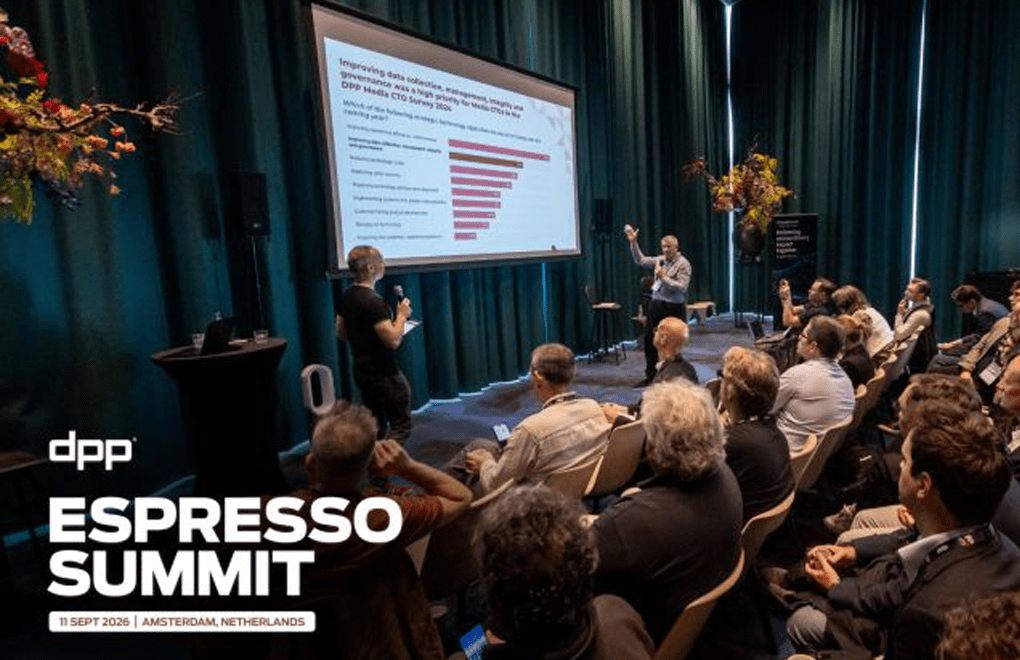
IBC 2026 brought the global media, entertainment and technology community together at the RAI Amsterdam from 11–14 September. More than 41,000 attendees from 170 countries joined over 1,300 exhibitors to explore the technologies and ideas shaping the future of content creation, management and delivery.
Artificial intelligence was inevitably a major topic, but the most interesting conversations went beyond AI for AI’s sake. Across established platforms and emerging technologies, the focus was increasingly on using Model Context Protocol (MCP), agentic interfaces, microservices and hybrid infrastructure to solve genuine operational challenges.
Following his return from IBC, Mike Fitchie, Head of Pre-Sales at Altered Images, shares his personal experience of the show, the technologies that caught his attention and why MCP became his three-letter acronym of IBC 2026.
Returning to IBC after a year away
For many reasons, I chose not to attend IBC in 2025. I had notched up and past the 20+ years of attendance, my head was not in a great space and the thought of trudging around the halls, consuming my bodyweight in beer and not great food, along with the noise, crowds of people and long days/nights, was to much. I just said no. And I am glad that I did. Fast forward a year and many things have changed.
Packing my bag and heading to the airport before the sun came out on the Friday still had me twitching a little, but it was ok. It felt different, there seemed to be more purpose to the trip this time. It was going to be OK.
Insert the now seemingly normal moan about Schiphol airport… more on that later.
The schedule was busy, meetings from the moment I arrived at the Rai with both customers and manufacturers. There were collective thoughts and plans around who and what we wanted to see as a team, we each had our lists. It was time, we were off, meeting one underway.
A clear theme emerges: MCP
In the meetings I had, there was a theme developing early on, a common term, a three letter acronym – MCP – Model Context Protocol. Yes – AI, yes – cloud and yes – if you have ever spoken to me about either, I have my opinions, and I don’t always buy into the hype! But for the years of noise, arguments, move to, repatriation from, robots will rule the world and other such discussions, it felt different. It felt like we had developed, moved forward, genuinely found better ways to do things and wrangle the machine away from cat videos for a while. My attention had been grabbed.
Moving from ideas to genuine use cases
Some will probably say that this is what AI, machine learning and power at scale was always about, I wouldn’t argue that, but what was different for me was the approach. Previously solutions were being made in the brave new world because of an idea, some great and challenging ideas, but not from the perspective of fixing an actual problem. We were then, and still very often now, approached by these developers with their platform and the question, can you think of a use case for us. Can you get us in front of your clients to see what they think. The cart was in front of the horse. It never sat well with me.
Fast forward to today. Some of those ideas have matured, some have fallen away, some have found their place, some are still looking but have been steered. It felt different. It felt better.
Glookast GKS and containerised media workflows
I have worked with the fine folks at Glookast for many years, their products were built to fix problems, make people’s lives easier, they worked, they were trusted, they were always being developed. All the right things. During the dev conversations, there was always the talk of what’s next, where is the product line going, what is the next big ask. The horse was back in front of the cart.
Shown at NAB and now demoing at IBC, Glookast GKS, the next generation of their portfolio and platform, truly demonstrates what can be achieved when you harness the capabilities of the brave new world whilst approaching it from the needs of the users, all whilst being aware of the challenges and limitations that security and workflow restrictions can impose. With a top down view and a bottom up build of the key products, Glookast have been able to migrate their previously ‘monolithic’ applications into a collection of containerised micro services. Not a small achievement on its own, but then, which for me is the massive step forward, is the brain. Able to run either fully air gapped on prem to entirely cloud based (and hybrid in-between – probably the most useful for most!), GKS brings all of the capabilities of the now containerised services/apps into an accessible AI capable front end, driven by MCP connectors. This approach immediately makes the solution accessible, easily deployable, familiar, trusted and incredibly powerful. We had a stream of customer meetings and demonstrations, they all went the same way. An intro to the platform, a demo of the expected and then the reveal of the new options driven by ‘Kortex”, the GKS agentic interface. This is when the pennies dropped. No longer was this just a workflow engine, a Content Agent replacement, a ‘monolithic’ product – it was so much more, it is the heart beat that connects into your infrastructure using it’s intelligence connecting via MCPs enabling you to create, manage, manipulate you workflows, data paths, ingest, delivery, capture, transcode, third party integration. And all via text prompts and not requiring permanent on-site devs creating bespoke fixes for islands of technology. People stopped asking questions about individual format support or singular issue requirements, that didn’t matter, it was all about just how much they could do with it now….
Avid: product development and agentic tools
The advantage of the large trade shows is the opportunity to get brands like Avid in the same room as the customers with the right people – from both sides.
After what has been a quieter time in the development of some of their key products – Media Composer and Nexis in particular, along with some less than favourable changes and press, there were questions that needed answering. What was good to hear and see is that there has been a significant increase in activity and new (and regularly requested) features are coming, and soon! Product roadmaps show definitive progress is being made. And yes, guess what, that three letter acronym – MCP – was there again. The Avid ‘Ready to’ agentic interface, driving advanced tools that will help the editor were there, working and making people sit up and take notice.
Snicket Labs and contextual data analysis
Snicket Labs have been getting under the skin of data analysis and mapping file differences/similarities for a long time. Until recently, they did not use AI for the analysis. And this was a selling point. But with the use of MCPs, they can now not only assess the files, looking for differences or likeness, they can examine the results through AI integrations linked through MCPs building contextual data into the findings, massively increasing the value of the information available.
Practical AI across media technology
And this theme carried on in so many products. Good, solid products that people use and rely on, benefiting from cloud/AI capabilities by harnessing the connection though MCPs solving actual problems, rather than just ideas that live in the clouds. So sometimes it is the little things that yield the most results and increase the power of the tools in our hands.
Other notable developments at IBC 2026
Strada
Other notable things!
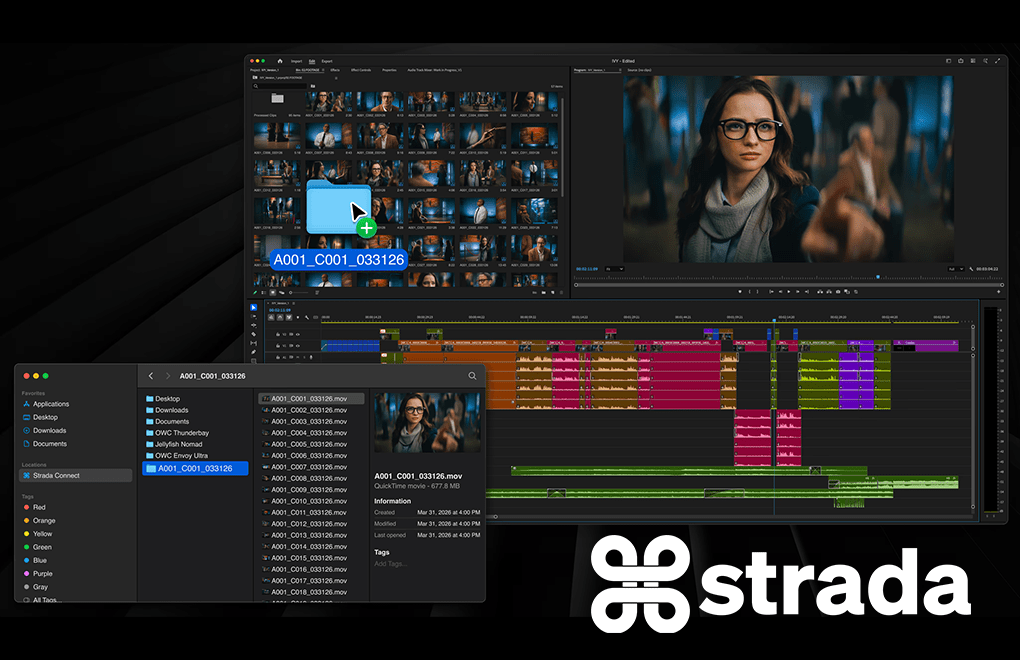
Strada continues to develop its offering, no names mentioned but one particular (and large) organisation immediately wanted to capitalise on the Strada toolset for their wider and remote workforce. Tests to start shortly, a potential game changer for them.
Hireworks and Salon
Both Hireworks and Salon have made generational jumps in their remote project sharing offerings. Great to see our friends developing products that make huge differences to their and our clients.
Cloud, on-premises and the hybrid reality
So is the future all Cloud – absolutely not. Are we all racing to live back on prem and in office – those days are long gone. Will AI ruin everything and take over the world – distinctly possibly. Are we seeing significant advancements in the hybrid world through increasingly capable and adaptive deployments of micro services and agentic opportunities – absolutely!
One final IBC challenge: Schiphol
Sunday evening approached and it was time for me to head back. Thoughts, ideas, plans all smashing around in the grey matter… but LinkedIn had started, the airport was a mess, again… how bad was it going to be? Not great, it never is and is getting worse, but there is another way, there always is,,,, don’t get caught up in terminal C’s chaos, take a gentle walk to B, go through security and passport control there and then wander back up to C. Under 10 minutes plus a few minutes walk and I had my beverage of choice in my hand. I was heading home. It was good. I was glad to be back.
Mike’s final takeaway
So for me, the power of the three letter acronyms is well and truly alive. And today, my favourite, is MCP.
What IBC 2026 means for media organisations
The takeaway from IBC 2026 is not that every organisation needs to move entirely to the cloud or introduce AI into every part of its operation. Instead, the opportunity lies in identifying where these technologies can solve real problems, remove repetitive work and connect systems more effectively.
The combination of established media technology, containerised microservices, MCP connections and agentic interfaces could make sophisticated workflows easier to deploy, manage and adapt. For broadcasters, production companies and post-production teams, this creates new possibilities across ingest, editing, media management, transcoding, remote collaboration, delivery and infrastructure automation.
The strongest solutions will be those designed around the people using them and the operational realities of security, integration, cost and performance.
If you are reviewing your post-production infrastructure, exploring remote or hybrid workflows, or considering how AI and automation could support your operation, speak to the Altered Images team. We can help you assess the technology, understand the practical options and design a workflow that fits your organisation.
Call our experts on 01932 255 666